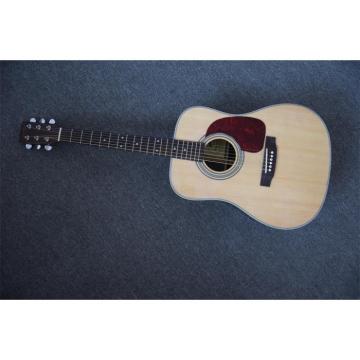
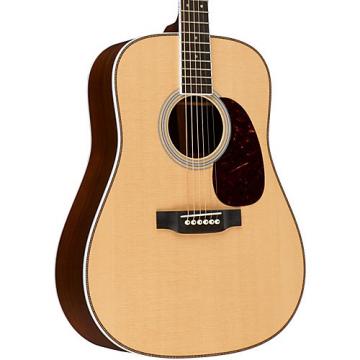
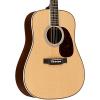
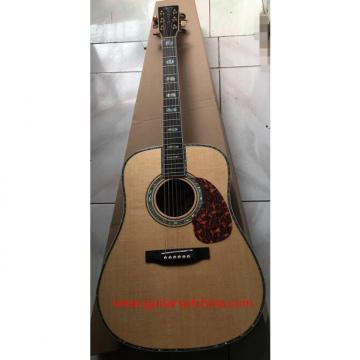
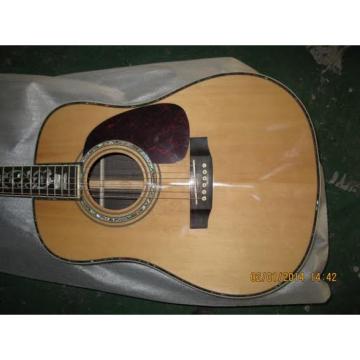
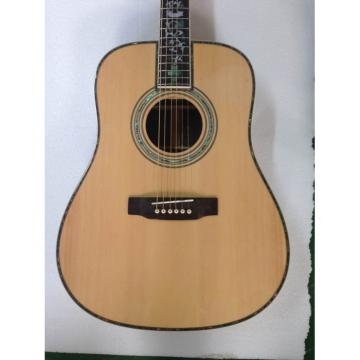
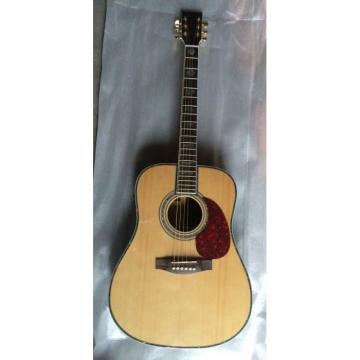
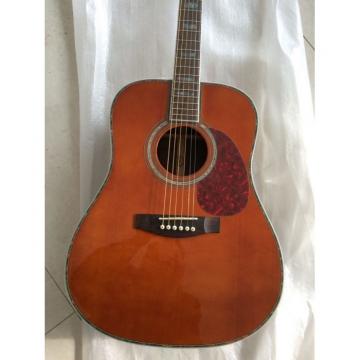
The HD-35 acoustic guitar combines Martin's visually striking 3-piece back design with many of the prewar features of the legendary herringbone D-28. Tonally, the guitar's rosewood back produces a strong bass, making it ideal for rhythm playing. The top is constructed of solid Sitka spruce and braced with scalloped 1/4" high-performance braces to deliver big, open tones.
3-piece rosewood back
Rosewood sides
Dreadnought body
Solid Sitka spruce top
Black and white rosette
24-fret Ebony fingerboard
Exclusive Martin bracing pattern
Herringbone top trim
White binding
Two zigzag back strips
Includes hardshell case
Custom Guitar's Friend Gold Coverage
Gold Coverage goes above and beyond the manufacturer's warranty to protect your gear from unexpected breakdowns, accidental damage from handling
and failures. This plan covers your product for one, two, three or up to five years from your date of purchase, costs just pennies per day and gives you a
complete "no-worry" solution for protecting your investment.
Gold Coverage Includes:
Unexpected and unintentional spills, drops and cracks
Normal wear and tear
Power surges
Dust, internal heat and humidity
Other plan features include:
For products over $200, No Lemon Policy applies. If it fails for the same defect 3 times, it is replaced on the 4th breakdown. (Does not apply to failures due to drops, spills, and cracks)
For products under $200 experiencing the above failures, a Custom Guitar's Friend gift card will be issued for the full price of the product + tax.
Shipping fees covered if required for repair or replacement
Plans are transferable in the event merchandise is sold
Plans are renewable on new gear
*Limitations and exclusions apply. See terms and conditions for program details
Term for New Gear begins on date of purchase but does not replace the store return policy or manufacturer coverage.
Displaying reviews 1-10
Back to top
PreviousNext »
The construction is flawless and the guitar is so playable it almost plays itself. It has a sound that is rich and full, and a range that allows playing from delicate softness to a barking roar.
The Martin HD35 has all the features of the std. D35, the 3 piece back and bound fingerboard. It also has the herringbone pattern around the edge of the box and slightly different scalloped braces on the top.
There are no flaws in this guitar - the craftsmanship is superb.
This guitar is expensive and worth it. It was built with very high production standards and a sound everyone else wants to copy.
Martin Standard Series HD-35 Dreadnought Acoustic Guitar
.I've got my HD35 as a 10th Anniversary gift in 1995. I had the luxury of playing 6 different HD35 guitar and picking out the one I wanted. They all were excellent. The sound just unbelievably projects from this guitar. It has a full, rich, deep, mellow tone unlike any other guitar I've played or heard. My buddy has a top end Taylor and it blows it away in every category of sound. I find myself almost having to play softer so I do not drown him out. Way more solid than any other guitar in the price range and worth every penny you spend. I would highly recommend this guitar. You will not be sorry.
Martin Standard Series HD-35 Dreadnought Acoustic Guitar
.I just bought a Martin HD-35 and it is one great guitar. I have played guitar for over 30 years. I own a Guild F50R and a Daion Carabou as well as a few electric guitars. I love all of them but this new martin HD-35 has just taken me over. The bass tones are not muddy at all and the treble tones ring out clearly. I strum one single chord in normal tuning and I hear tones and overtones as if I were playing with Joni Mitchell tuning. Every string can be heard in equal volume. I am amazed. This guitar draws me and is quickly becoming my main axe....
Martin Standard Series HD-35 Dreadnought Acoustic Guitar
.This guitar really is loud;an with the quarter inch bracing it really rings. This guitar is the best kept secret in the Martinline up. Thats why I called it a sleeper.
Martin Standard Series HD-35 Dreadnought Acoustic Guitar
.The finest guitar I've ever played (that I can afford) I've owned mine for about 2 years now. It's an absolute cannon. Just beautiful and even across the strings. I powered mine with a K&K Mini Trinity system and I use Martin Lifespan strings (light). I play this guitar EVERY day and it just keeps getting better. I played a D41 a little bit ago, but it didn't have the presence that this one does. I love the HDs. I also own a HD 16LSH (my road guitar). I'd put this guitar up against any guitar in the upper price range. For the money, there is none better....not even close.
Martin Standard Series HD-35 Dreadnought Acoustic Guitar
.Great guitars! Good Balance of tone, The best standard Martin guitar for country music. I would reccomend this Beautiful piece of craftsmanship to any one who ask's my reccomendation!
Martin Standard Series HD-35 Dreadnought Acoustic Guitar
.outstanding performance and value. Compared with Taylor 700 series and Martin D-28, HD-28, D-35 and D-41.
Martin Standard Series HD-35 Dreadnought Acoustic Guitar
.Great sound, clean looks, easy to play. only thing that sounds better, is when someone else plays it. (This is my 3rd martin. d-35, HD-35, D-15) all are great to play.
Martin Standard Series HD-35 Dreadnought Acoustic Guitar
.I bought my HD-35 back in April of 1985. It has never disappointed me. It sounds great it plays easy and it just makes me sound good. People are always amazed by the sound. I just smile and say, "It's a Martin." That is all you can really say.Before the HD-35 I owned a Laguna guitar, a hand crafted guitar in it's own right but the differences are like night and day. The HD-35 has a big booming voice, it just rings. I love it!
Martin Standard Series HD-35 Dreadnought Acoustic Guitar
.No other guitar I have played has such a full bottom. This guitar also projects VERY well... playing it you have no idea how far the sound carries in front of you.
Martin Standard Series HD-35 Dreadnought Acoustic Guitar
.
 English